
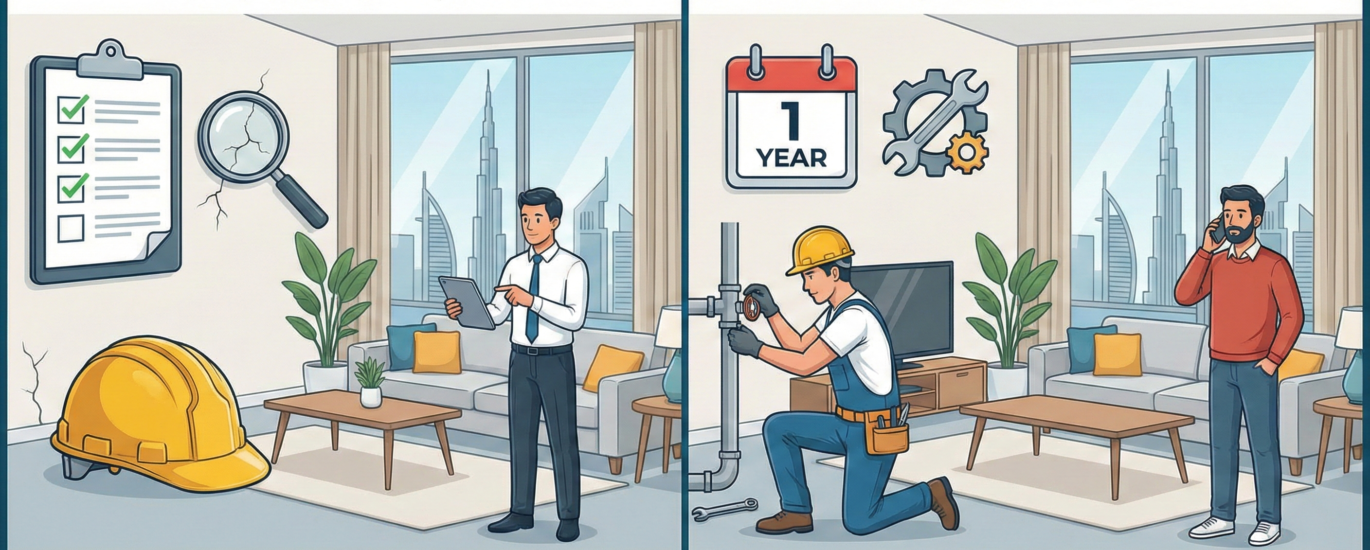
Buying a property in Dubai is a major investment, whether it’s for personal use or rental income. During the handover stage, buyers often hear two important terms: Snagging and Defect Liability Period (DLP). While they are closely related, they serve different purposes. Understanding the difference between snagging and DLP can help you protect your investment and avoid costly repairs later.
What Is Snagging in Dubai Real Estate?
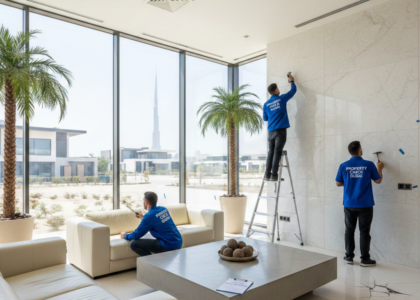
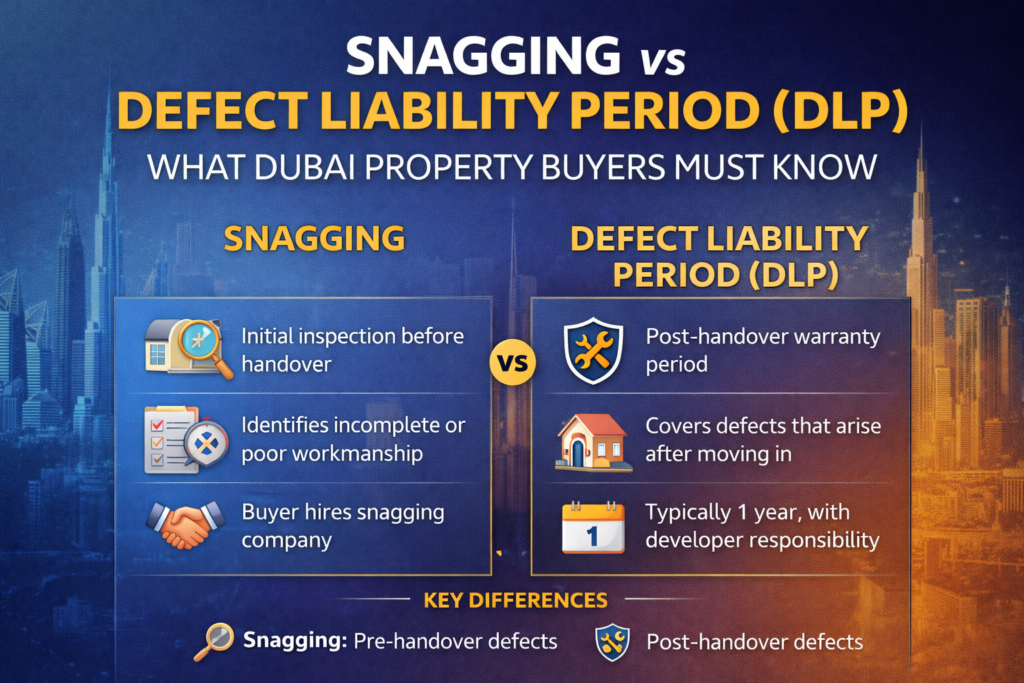
Snagging is the process of inspecting a property before or at the time of handover to identify visible defects, unfinished work, or quality issues. This inspection ensures the property meets the agreed standards mentioned in the sale and purchase agreement.
Common Snagging Issues Include:
- Cracked walls or ceilings
- Poor paint finishing
- Faulty doors, windows, or locks
- Plumbing leaks or water pressure issues
- Electrical faults and loose fittings
- Uneven flooring or broken tiles
Snagging is usually conducted before you sign the handover documents. Once identified, the developer is required to fix these issues before you move in or rent out the property.
Why Snagging Is Important for Property Buyers
Many defects are not immediately obvious to untrained eyes. Professional snagging inspections help buyers:
- Identify construction and finishing flaws early
- Avoid disputes with developers later
- Ensure the property is delivered as promised
- Save money on future repairs
In Dubai’s fast-paced construction market, snagging is a crucial step for both off-plan and ready properties.
What Is the Defect Liability Period (DLP)?
The Defect Liability Period (DLP) is a warranty period provided by the developer after the property handover. In Dubai, this period typically lasts 12 months, though the exact duration depends on the contract.
During the DLP, the developer is responsible for repairing construction-related defects that appear after you move in—provided they are not caused by misuse or normal wear and tear.
Defects Covered Under DLP:
- Structural cracks
- Water leakage from walls or ceilings
- Electrical system failures
- Plumbing system defects
- HVAC and ventilation issues
Snagging vs Defect Liability Period: Key Differences
| Aspect | Snagging | Defect Liability Period (DLP) |
|---|---|---|
| Timing | Before or at handover | After handover |
| Duration | One-time inspection | Usually 12 months |
| Purpose | Identify visible defects | Cover hidden or emerging defects |
| Responsibility | Developer fixes before handover | Developer fixes during DLP |
| Best Practice | Hire a snagging expert | Report issues promptly in writing |
Can Snagging Be Done During the DLP?
Yes, snagging can also be done during the DLP, especially for secondary inspections. However, it’s always best to complete a detailed snagging inspection before handover to avoid delays, disputes, or limitations on what the developer will fix.
Tips for Dubai Property Buyers
- Always conduct professional snagging before accepting handover
- Keep written records and emails of all reported defects
- Report DLP issues as soon as they appear
- Understand what is covered under your Sale and Purchase Agreement
- Do not wait until the DLP expires to raise concerns
Final Thoughts
Both snagging and the Defect Liability Period (DLP) play a critical role in safeguarding your Dubai property investment. Snagging ensures your home is delivered defect-free, while the DLP acts as a safety net for issues that arise after occupancy. Using both effectively can save you time, stress, and money.
If you’re buying property in Dubai, never skip snagging—and make full use of your DLP.