

Investing in real estate is one of the most reliable ways to build long-term wealth. However, many property investors overlook one critical step before renting out a newly purchased unit — property snagging. Skipping this step can lead to unexpected expenses, tenant complaints, and legal issues that directly impact rental income and ROI.
Snagging a property before renting it out is not an expense; it’s a smart investment decision.
What Is Property Snagging?
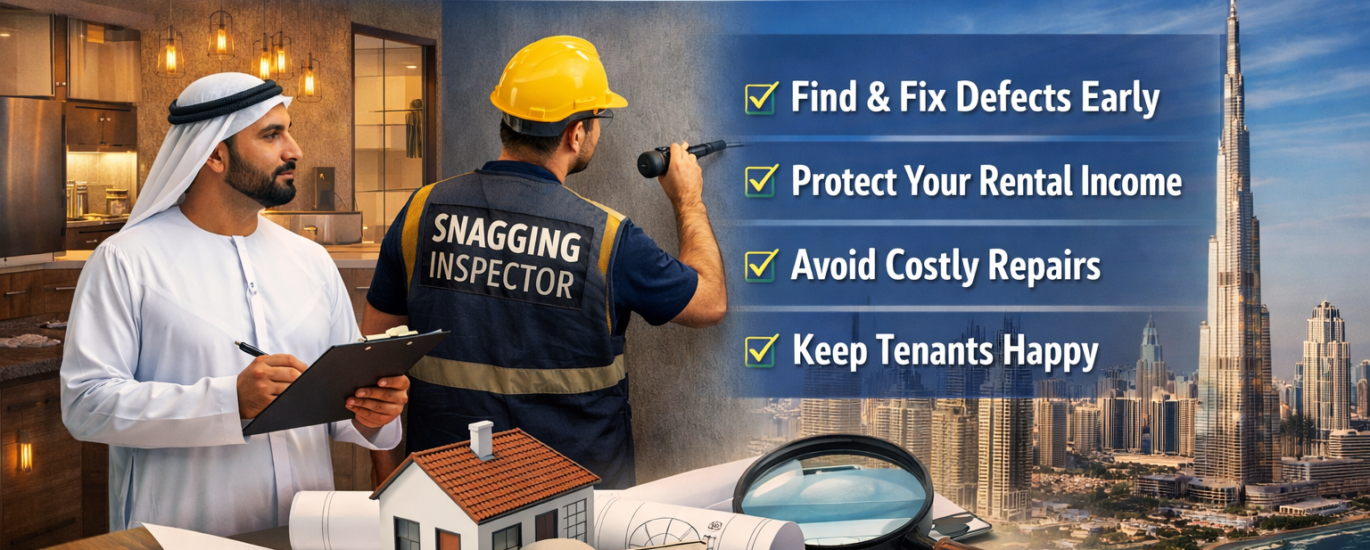
Property snagging is a detailed inspection of a property to identify defects, poor workmanship, unfinished work, or safety issues before the property is handed over or rented.
These defects can include:
- Plumbing leaks or low water pressure
- Electrical faults and loose fittings
- Poor tiling, paint cracks, or uneven flooring
- AC and ventilation issues
- Doors, windows, or locks not functioning properly

1. Protect Your Rental Income from Day One
Tenants expect a move-in-ready home. Any defect discovered after tenancy begins can lead to:
- Rent reductions
- Delayed payments
- Early contract termination
By snagging the property first, you ensure zero disruptions to rental income and a smooth tenant move-in experience.
2. Avoid Costly Repairs After Tenant Move-In
Minor defects can turn into major expenses if ignored. Fixing issues after renting often costs more due to:
- Emergency repair charges
- Tenant inconvenience claims
- Contractor availability issues
Snagging allows you to fix problems early, often at the developer’s cost if still under warranty or DLP (Defect Liability Period).
3. Ensure Developer Accountability During DLP
For new properties, snagging during the Defect Liability Period (DLP) ensures:
- Repairs are completed by the developer
- No out-of-pocket repair costs
- Legal protection if disputes arise
Failing to snag within this period means you bear all future repair expenses.
4. Increase Property Value & Rental Appeal
A snag-free property:
- Attracts higher-quality tenants
- Justifies higher rent
- Reduces vacancy periods
Tenants are more likely to renew contracts when the property is well-maintained and free from recurring issues.
5. Prevent Legal & Compliance Issues
Faulty electrical systems, water leaks, or structural defects can:
- Violate local safety regulations
- Lead to tenant disputes or legal claims
- Impact landlord reputation
Snagging ensures your property complies with health, safety, and rental regulations before leasing.
6. Strengthen Your Reputation as a Landlord
Professional investors think long-term. Delivering a well-finished, defect-free home:
- Builds trust with tenants
- Leads to positive referrals
- Reduces management headaches
A strong landlord reputation is an asset that pays off over multiple rental cycles.
7. Save Time, Money & Stress
Snagging might take a day — but it can save months of frustration later.
Think of it as insurance for your investment:
- Lower maintenance costs
- Fewer tenant complaints
- Predictable cash flow
When Should You Snag a Rental Property?
✔ Before handover acceptance
✔ Before tenant move-in
✔ During DLP for new builds
✔ Before listing the property for rent
Final Thoughts
Snagging a property before renting it out is not optional for serious investors — it’s essential. Whether you’re a first-time landlord or managing a large portfolio, snagging protects your asset, maximizes ROI, and ensures long-term rental success.
A well-snagged property is a profitable property.






For a premium experience, sagamingvertical is where it’s at. Feels top-notch and the interface is great. Peep it: sagamingvertical