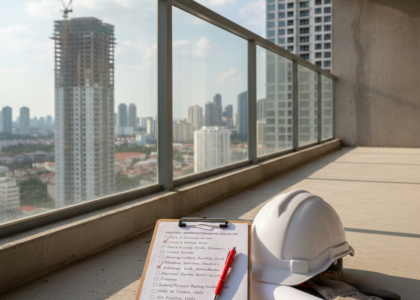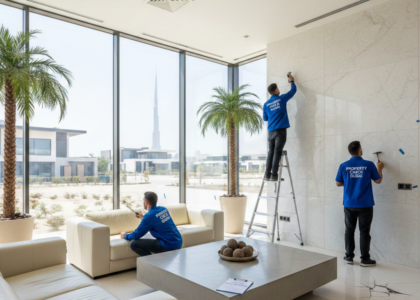

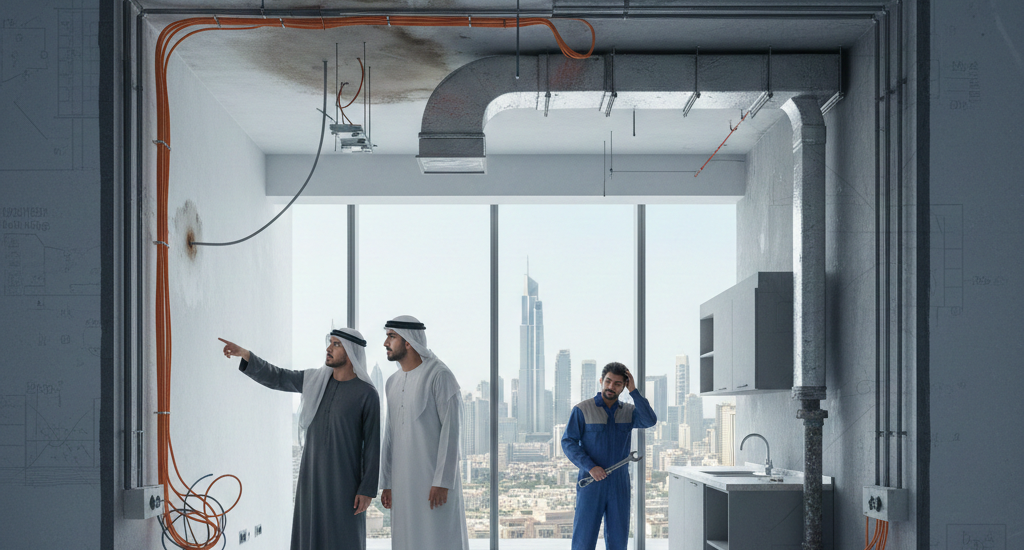
Buying a brand-new home in Dubai is exciting—modern layouts, premium finishes, and the promise of hassle-free living. However, many homeowners are surprised to discover that newly constructed apartments and villas can still have serious defects, especially in electrical, plumbing, and HVAC systems. These hidden issues, if ignored, can lead to safety risks, discomfort, and costly repairs.
This blog highlights the most common MEP (Mechanical, Electrical & Plumbing) defects found in new Dubai homes and why professional inspections are essential before handover.
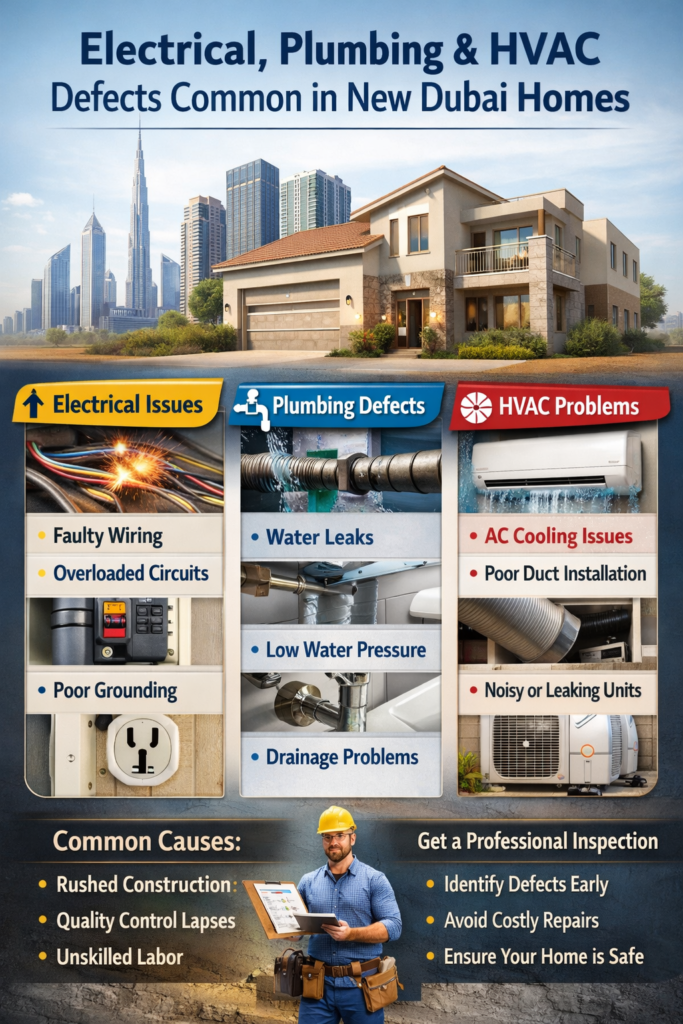
Common Electrical Defects in New Dubai Homes
Electrical problems are among the most critical defects, as they directly affect safety.
1. Loose or Improper Wiring
Poor workmanship often results in loose connections, increasing the risk of short circuits, power failures, or even electrical fires.
2. Overloaded Circuits
Incorrect load calculations can cause frequent tripping of circuit breakers, especially when multiple appliances are used simultaneously.
3. Poor Earthing (Grounding)
Inadequate earthing is a common issue and poses serious shock hazards, particularly in kitchens and bathrooms.
4. Faulty Switches and Sockets
Misaligned, loose, or non-functional switches and power outlets are frequently reported during handover inspections.
5. Non-Compliance with DEWA Standards
Some installations fail to fully comply with Dubai Electricity and Water Authority (DEWA) safety and quality requirements.
Common Plumbing Defects in Newly Built Properties
Plumbing issues may not be visible immediately but can cause long-term damage if left unchecked.
1. Water Leakages
Leaks under sinks, behind walls, or in concealed pipes are common and can lead to mold growth and structural damage.
2. Poor Water Pressure
Incorrect pipe sizing or improper installation often results in low or inconsistent water pressure.
3. Improper Drainage
Slow drainage, gurgling sounds, or bad odors indicate poor slope design or blocked pipes.
4. Low-Quality Fixtures
Inferior faucets, valves, and fittings may start leaking or malfunctioning soon after occupancy.
5. Hot Water System Issues
Delayed hot water, fluctuating temperatures, or faulty heaters are common complaints in new homes.
Common HVAC Defects in New Dubai Homes
Given Dubai’s climate, HVAC performance is critical for comfort and energy efficiency.
1. Incorrect AC Sizing
Undersized or oversized units lead to poor cooling, high energy bills, and frequent breakdowns.
2. Poor Duct Installation
Leaking or poorly insulated ducts reduce cooling efficiency and create uneven temperatures across rooms.
3. Improper Thermostat Placement
Incorrect placement can cause inaccurate temperature readings and inefficient system operation.
4. Drainage Issues
Blocked or poorly installed condensate drain lines can cause water leakage and ceiling damage.
5. Excessive Noise and Vibration
Improperly mounted indoor or outdoor units often produce disturbing noise and vibrations.
Why These Defects Occur in New Dubai Properties
- Tight construction deadlines
- Cost-cutting by contractors
- Use of unskilled labor
- Lack of thorough quality checks
- Inadequate final inspections before handover
Importance of a Professional Home Inspection
A professional snagging or handover inspection can identify hidden MEP defects before you move in. Early detection allows developers to fix issues under warranty, saving homeowners from future repair costs.
Benefits of Inspection:
- Ensures compliance with Dubai building regulations
- Improves safety and comfort
- Prevents long-term maintenance expenses
- Strengthens handover negotiation with developers
Final Thoughts
Even new homes in Dubai are not immune to electrical, plumbing, and HVAC defects. Conducting a detailed inspection before handover is not just recommended—it’s essential. Identifying and fixing these issues early ensures your new home is safe, comfortable, and built to the quality you expect.
If you’re planning a property handover or post-handover inspection in Dubai, always rely on experienced professionals to protect your investment.