

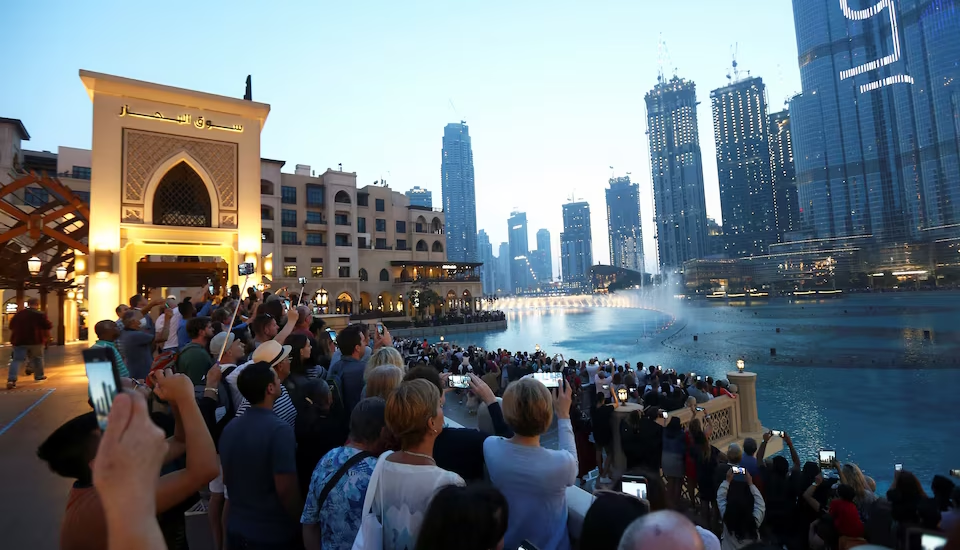
The airport and the landmark Burj Al Arab hotel also sustained damage, alarming international tourists who spent an estimated $194 billion in the region last year, according to World Travel & Tourism Council data.
Cancellations for vacation rentals in the United Arab Emirates more than doubled on Saturday to around 8,450 units after the initial attacks, according to data firm AirDNA. Most were for stays scheduled in March.
“There’s a big collapse in bookings to the Middle East,” Michael O’Leary, CEO of budget carrier Ryanair (RYA.I), opens new tab, told reporters on Tuesday, adding the fallout had driven a surge in demand for short‑haul flights to places like Portugal, Italy, and Greece ahead of the Easter holiday period. Still, he noted the Middle East has historically rebounded from bouts of regional instability.
“I suspect it won’t go on long and therefore I suspect it won’t have any long-term trends, but I think there’s no doubt that it has undermined confidence in air travel to the Gulf.”
Dubai’s tourism office said in a statement on Tuesday that visitor safety was its highest priority and hotels had been asked to support affected guests, citing the city’s experience managing “periods of global disruption”.
POTENTIAL $56 BILLION HIT
Between 23 million and 38 million fewer people could travel to the Middle East this year than expected, depending on the duration of the conflict, consultancy Tourism Economics said.
“This includes expected lingering sentiment impacts beyond the immediate conflict period,” the consultancy’s Helen McDermott and Jessie Smith wrote in a note, pegging the potential loss in visitor spend at some $34 billion to $56 billion.
Benjamin Jacobi, Germany’s head for travel giant TUI (TUI1n.DE), opens a new tab, which operates cruises and flights to the region, said bookers hope the situation calms down, though “that’s not in sight” for the moment. Prices for flights between Asia and Europe were surging after Middle Eastern hubs closed as people booking trips tried to work around the disruptions.
“There will certainly be a dip in demand. However, this depends very much on how this armed conflict develops,” he told Reuters in Berlin, adding the firm was seeing a “certain shift” among vacationers towards choosing the western Mediterranean. “Everything is very volatile at the moment.”
KEEPING CALM
Thousands of people scrambled to get out of the region after the conflict erupted, with the U.S. on Monday telling Americans to leave, days after the first strikes on Iranian targets.